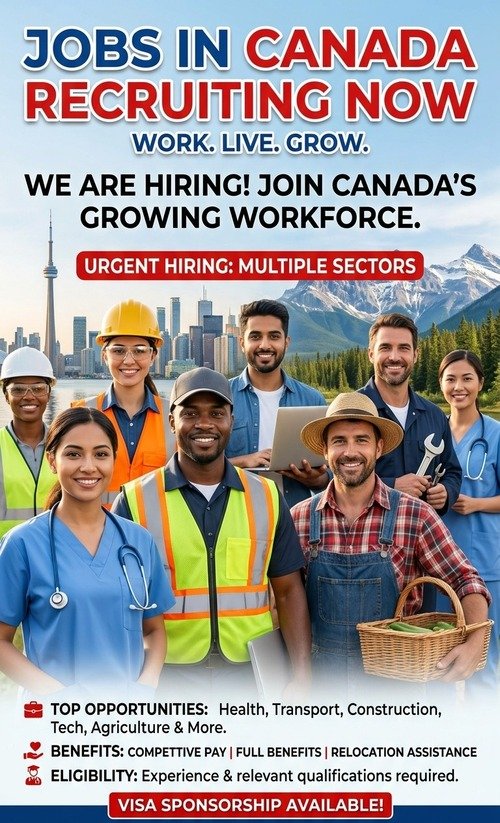
Canada General Laborer & Factory Jobs with Work Permit Sponsorship. International job seekers can secure stable employment through Canada General Laborer & Factory Jobs with Work Permit Sponsorship, which provides employer-backed work visas and long-term settlement opportunities. Canadian industrial, food processing, and manufacturing sectors actively hire overseas candidates to resolve domestic worker shortages in entry-level labor roles. Applicants pursuing LMIA-approved factory worker jobs in Canada with visa sponsorship receive competitive hourly wages, structured health benefits, and employer-assisted accommodation support under federal program guidelines. The hiring framework operates through the Temporary Foreign Worker Program (TFWP), allowing entry-level laborers to obtain legal closed work permits. Securing a sponsored manufacturing position provides financial stability, hands-on industrial skills, and viable routes toward Canadian permanent residency.
Canada General Laborer & Factory Jobs with Work Permit Sponsorship
| Employment Attribute | Official Details & Program Specifications |
| Job Title / Primary Position | Factory Worker, General Laborer, Food Processing Packer, Assembly Line Assistant, Material Handler |
| Industry / Commercial Sector | Industrial Manufacturing, Food & Beverage Processing, Automotive Assembly, Warehousing & Logistics |
| Visa Sponsorship Type | Full Work Visa Sponsorship (LMIA Approved / Employer Sponsored Relocation) |
| Eligible Nationality | Open to All Foreign Nationalities Worldwide |
| Destination Country & Provinces | Canada (Ontario, British Columbia, Alberta, Quebec, Manitoba, and Saskatchewan) |
| Application Deadline & Cycle | Continuous Year-Round Recruitment (Peak Hiring: Ongoing High-Volume Plant Production Drives) |
Comprehensive Overview of the Canadian Manufacturing and Industrial Labor Sector
The Canadian manufacturing and industrial processing sectors serve as major drivers of the national economy, supplying essential consumer goods, packaged foods, automotive components, and building materials. Canadian industrial plants face persistent labor deficits due to rural manufacturing expansion, an aging local workforce, and high production targets. To maintain continuous factory operations, Employment and Social Development Canada (ESDC) collaborates with industrial employers to enable foreign worker recruitment. Securing Canada General Laborer & Factory Jobs with a Work Permit Sponsorship requires navigating defined federal immigration framework channels designed to protect temporary foreign workers while filling critical economic gaps.
How to Find Software Developer Jobs in Canada with Work Permit Support
🌍 More Available Jobs

Commercial manufacturing enterprises rely heavily on the Low-Wage Stream foreign labor compliance framework under the Temporary Foreign Worker Program to hire foreign candidates when domestic recruitment efforts fall short. Before issuing job offers to foreign nationals, Canadian employers must obtain a positive Labour Market Impact Assessment (LMIA). This document verifies that hiring an international applicant will not negatively impact the domestic labor force. Industrial businesses invest in global mobility strategies to maintain supply chain continuity across automotive assembly, food production, and goods packaging.
Canadian Industrial Recruitment Pipeline:
🌍 More Available Jobs
-
Canadian factory or processing plant experiences domestic general labor shortages.
-
The employer applies for a Labour Market Impact Assessment (LMIA) through ESDC.
-
ESDC approves the LMIA, confirming local labor shortages and wage standard compliance.
-
Employer issues a formal job offer with an official LMIA approval reference number.
-
Candidate applies for an employer-sponsored closed work permit via the IRCC online portal.
-
Candidate completes medical clearance, biometrics enrollment, and visa stamping to enter Canada.
The Canadian government strictly regulates employment terms for foreign industrial workers. Employers must offer salaries that meet or exceed regional prevailing wage rate compliance parameters established by federal job banks. International recruits receive formal contracts outlining daily duties, hourly pay, overtime rates, and housing assistance provisions. These measures make Canada a prime destination for global general laborers seeking clear legal frameworks and stable industrial employment.
Top 10 Provincial Nominee Programs (PNP) for Low-Skilled & Skilled Jobs
In-Demand Factory, Assembly, and General Labor Roles
The manufacturing domain in Canada encompasses diverse specialized fields ranging from heavy industrial material handling to consumer goods packaging. Foreign applicants can evaluate various job profiles based on their physical capabilities, technical aptitude, and long-term career goals.
Food Processing Plant Workers and Packaging Helpers
Food processing facilities across Canada rely on packaging workers to maintain continuous production cycles. Candidates seeking food processing plant packaging worker jobs in Ontario with LMIA work in hygienic, climate-controlled environments. Daily duties include inspecting processed food items, operating automated packaging machinery, placing products into shipping containers, and maintaining cleanliness standards on processing floors.
Welder, Electrician & Heavy Equipment Mechanic Jobs in Canada for Foreigners
Entry-level food processing roles do not require advanced academic degrees, as employers provide safety training and operational instruction on the job. Reliability, attention to detail, and adherence to sanitation standards are essential qualities for success in these high-volume positions.
Assembly Line Operators and Manufacturing Assistants
Manufacturing assembly plants produce automotive parts, consumer electronics, plastics, and industrial machinery components. Applicants targeting assembly line worker job openings in Alberta for foreign nationals assist senior machine operators by feeding raw materials into production equipment, monitoring conveyor belts, sorting finished goods, and packing products for transportation.
Manufacturing Assembly Line Workflow:
-
Raw Material Feed: Loading metal, plastic, or composite components onto conveyer feeds.
-
Automated Processing: Assisting automated machinery during stamping, molding, or assembly.
-
Quality Inspection: Checking finished components for dimension accuracy and visual defects.
-
Final Packaging: Stacking, palletizing, and wrapping completed goods for warehouse logistics.
Assembly line positions require physical stamina, manual dexterity, and the ability to perform repetitive tasks accurately during full-time shifts. Factory workers gain practical experience with modern industrial machinery and automated manufacturing systems.
Warehouse Material Handlers and Logistics Helpers
Distribution hubs and factory warehouses require material handlers to process incoming shipments, manage inventory, and prepare outgoing freight. Candidates applying for warehouse material handler visa sponsorship British Columbia positions operate pallet jacks, assist forklift drivers, load and unload transport trucks, and organize inventory within large distribution centers.
Material handling roles require physical strength, basic computer skills for inventory scanning, and strict adherence to occupational safety standards. Experienced material handlers can advance to warehouse inventory coordinator or logistics supervisor positions over time.
Processing Plant Butcher Helpers and Meat Cutters
Canadian protein processing plants represent major employers of international labor under specialized agricultural and manufacturing streams. Overseas applicants seeking Canadian meat processing plant butcher helper jobs for international candidates perform tasks like trimming meat cuts, operating packaging machinery, maintaining knife sanitation, and packing frozen meat products for export.
| Specialized Job Profile | Primary NOC TEER | Typical Hourly Wage Range (CAD) | Core Physical & Operational Skills |
| Factory General Laborer | NOC 95106 (TEER 5) | $17.50 – $22.00 / hour | Material handling, physical stamina, tool operation |
| Food Packaging Helper | NOC 95101 (TEER 5) | $17.85 – $21.50 / hour | Visual quality inspection, sanitation, automated packaging |
| Assembly Machine Helper | NOC 94140 (TEER 4) | $18.50 – $24.00 / hour | Machine feeding, component sorting, safety protocol adherence |
| Meat Processing Helper | NOC 94141 (TEER 4) | $19.00 – $25.00 / hour | Knife handling, carcass trimming, cold-room endurance |
| Warehouse Material Handler | NOC 75110 (TEER 5) | $18.00 – $23.50 / hour | Pallet jack operation, heavy lifting, inventory scanning |
Legal Visa Pathways and Work Permit Frameworks for Overseas Laborers
Foreign laborers can access several defined immigration pathways to work legally in the Canadian industrial sector. Understanding the specific requirements of each visa stream helps candidates navigate their application process effectively.
Canadian Industrial Visa Streams:
-
Low-Wage Stream (TFWP): Covers positions paying below the provincial median hourly wage, providing up to 2-year employer-sponsored work permits.
-
High-Wage Stream (TFWP): Covers specialized factory technicians and supervisors earning above the regional median wage rate.
-
Provincial Entry-Level Streams: Accelerated provincial pathways allowing foreign laborers to apply for permanent residence after local employment.
The Low-Wage Stream Under the Temporary Foreign Worker Program
The primary route for overseas factory laborers is the Low-Wage Stream of the Temporary Foreign Worker Program (TFWP). Canadian employers use this stream to recruit foreign labor for entry-level roles paying below the provincial median hourly wage when local applicants are unavailable.
Under Low-Wage TFWP regulations, employers must cover round-trip transportation costs for foreign workers arriving in Canada. Employers must also help workers find affordable housing that meets government inspection standards. Applicants receive an employer-sponsored closed work permit, tying their legal work authorization to the sponsoring plant or factory.
Provincial Work Permit Streams for Semi-Skilled Candidates
Provinces facing severe industrial labor shortages operate dedicated work permit support streams for semi-skilled and entry-level workers. Programs like the Ontario In-Demand Skills Stream, the BC PNP Entry-Level and Semi-Skilled (ELSS) category, and the Saskatchewan Hard-to-Fill Skills Pilot allow factory laborers to secure provincial work permit support and transition to permanent residency.
Employer Compliance and LMIA Approvals
Canadian industrial employers must satisfy strict federal compliance requirements before obtaining LMIA approvals. ESDC evaluates employer applications to ensure that proposed wages match local standards, working conditions meet safety codes, and local recruitment efforts were completed. Employers face regular compliance audits to protect foreign workers from wage exploitation or improper working environments.
Step-by-Step Recruitment and Visa Application Process
Securing a factory job in Canada requires following an organized application procedure. Applicants must deal directly with verified employers or licensed recruitment channels to ensure a safe application process.
Industrial Recruitment & Application Progression:
-
Search verified LMIA positions on Job Bank Canada or official corporate career portals.
-
Format your resume according to Canadian standard guidelines, highlighting relevant industrial experience.
-
Secure an official job offer letter alongside a positive LMIA reference number.
-
Submit the online work permit application through the IRCC portal.
-
Complete biometrics enrolment and a panel medical examination.
-
Obtain visa counterfoil and Port of Entry Letter of Introduction.
Stage 1: Identifying Verified LMIA Employer Positions
Candidates should begin their search on official government platforms like the Job Bank Canada official employer roster. Job listings that specify “LMIA Approved” or “Temporary Foreign Worker Stream” explicitly invite foreign applications.
Applicants can also submit direct applications to major industrial manufacturing enterprises with established foreign worker recruitment programs. These include companies like Maple Leaf Foods, Cargill Canada, Olymel, Weston Foods, and Linamar Corporation.
Stage 2: Drafting Canadian-Standard Resumes and Document Preparation
Applicants need to prepare a clean, professional Canadian-style CV. Resume content should emphasize relevant practical experience, including manual labor, factory machinery operation, workplace safety, and physical stamina.
Canadian Industrial CV Guidelines:
-
Contact Details: Clean header, valid email address, active phone number, and no photos.
-
Professional Summary: Highlight physical stamina, machine experience, and safety compliance.
-
Work History: Detail specific factory machinery operated, packaging volumes, and safety records.
-
Education & Certifications: High school diploma, first aid certificates, or WHMIS training.
-
Language Skills: Functional level of English or French proficiency (targeting CLB 4 equivalent).
Important documents to assemble include:
-
A valid international passport with at least 12 months of validity.
-
Employment reference letters from previous manufacturing or industrial employers.
-
Educational certificates or vocational training documents.
-
Police clearance certificates from home countries.
Stage 3: IRCC Online Application, Biometrics, and Work Permit Approval
Once an employer issues a formal job offer and LMIA document, the candidate applies for a work permit through the IRCC portal. Applicants must complete biometrics enrolment and panel medical exam procedures at authorized collection centers.
After IRCC approves the application, the candidate receives a Port of Entry (POE) Letter of Introduction and a visa counterfoil stamped in their passport. This documentation allows travel to Canada, where border officials issue the actual work permit upon arrival.
Wages, Compensation Structure, and Relocation Benefits
Canadian labor law guarantees fair compensation and safe working conditions for foreign general laborers. Pay structures conform to mandated provincial wage standards.
Mandated Industrial Labor Benefits:
-
Guaranteed minimum prevailing hourly wage (CAD $17.50 – $25.00+ depending on the role).
-
Employer-paid inbound and outbound international transportation under low-wage streams.
-
Employer-assisted affordable housing options near manufacturing facilities.
-
Immediate emergency workplace health and injury insurance coverage.
-
Overtime pay eligibility based on provincial labor legislation.
Employers providing Employer-provided subsidized accommodation ensure housing meets municipal health and safety standards. Housing arrangements typically include furnished quarters, heating, laundry facilities, and functional kitchen areas, with costs capped at minimal weekly payroll deductions.
Employers manage international tax withholdings, Canadian Pension Plan (CPP) contributions, and Employment Insurance (EI) deductions using standardized payroll systems. Workers receive emergency medical coverage from their arrival date until provincial health coverage takes effect.
Pathways to Canadian Permanent Residency (PR) for Factory Workers
Working in Canadian manufacturing can provide a strong foundation for long-term immigration. Temporary foreign workers can leverage their Canadian job experience to apply for permanent residency through several streams.
Permanent Residency Migration Pathways:
-
Accumulate 6 to 12 months of continuous Canadian factory work experience.
-
Demonstrate basic language proficiency equivalent to CLB 4 in speaking, reading, writing, and listening.
-
Apply to specialized Provincial Nominee Program (PNP) streams (e.g., OINP In-Demand Skills, BC PNP Semi-Skilled, Alberta Rural Renewal, Saskatchewan Hard-to-Fill Skills Pilot).
-
Transition from temporary work permit status to Canadian Permanent Resident (PR) status.
Foreign laborers can pursue permanent residency through specialized provincial streams:
-
Ontario Immigrant Nominee Program (OINP) In-Demand Skills Stream: Targets NOC 95106 and 95101 general factory workers with local job offers.
-
British Columbia PNP Entry-Level and Semi-Skilled (ELSS): Supports manufacturing and food processing workers who complete 9 months of continuous employment in B.C.
-
Alberta Rural Renewal Stream: Assists rural manufacturing plants in retaining foreign staff long-term.
-
Saskatchewan Hard-to-Fill Skills Pilot: Allows entry-level factory laborers with 6 months of local experience to apply for provincial nomination.
Applicants need to demonstrate basic language skills, typically achieving a Canadian Language Benchmark (CLB) level 4 in English or French. Securing permanent residency grants foreign workers access to healthcare, social benefits, and a pathway to Canadian citizenship.
Anti-Fraud Standards, LMIA Verification, and Worker Rights
Protecting foreign workers from recruitment fraud and workplace exploitation remains a priority for Canadian immigration authorities. Applicants should learn to identify common warning signs and understand their rights under Canadian law.
Recruitment Fraud Warning Signs:
-
Flag 1: Demanding upfront placement fees or guaranteed visa processing money.
-
Flag 2: Issuing unofficial job offers without a verified 7-digit LMIA reference code.
-
Flag 3: Conducting recruitment exclusively through informal messaging platforms.
-
Flag 4: Offering pay rates significantly below provincial minimum wage standards.
-
Flag 5: Refusing to provide a formal written employment contract prior to departure.
Canadian law strictly forbids recruiters from charging job placement fees to prospective foreign workers. Legitimate employers pay all LMIA application fees, legal expenses, and recruitment overhead directly. Candidates should verify LMIA documents through ESDC portals before making travel arrangements or resigning from current jobs.
Foreign factory workers in Canada share the same basic workplace safety protections as domestic employees, including the right to receive Personal Protective Equipment (PPE) & WHMIS standards training. If a worker experiences unsafe conditions or mistreatment, Canadian immigration policies allow them to apply for an open work permit for vulnerable workers. This permit lets affected employees leave bad work environments and find employment with another manufacturing employer safely.
Frequently Asked Questions (FAQs)
Do Canadian factory jobs offer full work permit sponsorship for international applicants?
Yes, Canadian manufacturing employers facing local labor shortages can obtain positive LMIA approvals to sponsor foreign workers. Sponsoring employers assist applicants in securing closed, employer-specific work permits under the Temporary Foreign Worker Program.
What is the average starting hourly wage for factory workers in Canada?
Starting hourly pay rates generally range from $17.50 to $23.50 for entry-level factory general laborers, food packagers, and assembly assistants. Experienced machine operators, butcher helpers, and plant supervisors can earn between $22.00 and $30.00 per hour depending on the province and industry.
Is free accommodation provided to foreign general laborers?
Under the low-wage stream of the Temporary Foreign Worker Program, employers must assist foreign workers in finding suitable, inspected housing. While some food processing employers provide free housing, others provide subsidized housing with low, government-regulated weekly payroll deductions.
Do I need higher English scores to work in a Canadian manufacturing plant?
Entry-level factory positions require basic functional communication skills, equivalent to Canadian Language Benchmark (CLB) level 4. Workers need enough language proficiency to understand workplace safety instructions, read equipment labels, and communicate with plant supervisors.
Can general laborers bring their families to Canada?
Low-wage temporary general labor work permits generally do not include immediate family accompaniment during initial entry. However, workers who transition to permanent residency through Provincial Nominee Programs can sponsor their spouse and dependent children for Canadian permanent residency.
Strategic Conclusion
Navigating Canada General Laborer & Factory Jobs with Work Permit Sponsorship provides foreign workers with a structured path to legal employment and potential long-term settlement. By securing positions with LMIA approved factory worker jobs in Canada with visa sponsorship, foreign nationals gain valuable industrial experience, protected wages, and employer-supported accommodation. Candidates can begin by building a Canadian-style resume, applying through official channels like Job Bank Canada, and tracking provincial nomination pathways to transition from temporary factory work to permanent residency.
Official Visa Sponsorship & Employment Resources
-
Government of Canada Official Job Bank: https://www.jobbank.gc.ca — Search verified temporary foreign worker job listings and LMIA-approved manufacturing opportunities across all Canadian provinces.
-
Immigration, Refugees and Citizenship Canada (IRCC): https://www.canada.ca/en/immigration-refugees-citizenship.html — Official information on work permits, biometrics, medical exams, and permanent residency programs.
-
Employment and Social Development Canada (ESDC) Low-Wage Stream: https://www.canada.ca/en/employment-social-development.html — Guidelines on temporary foreign worker regulations, LMIA processing, and employer housing standards.
Get Visa Sponsorship Jobs!
Never miss international job openings with visa sponsorship! Join our professional networks for daily updates.