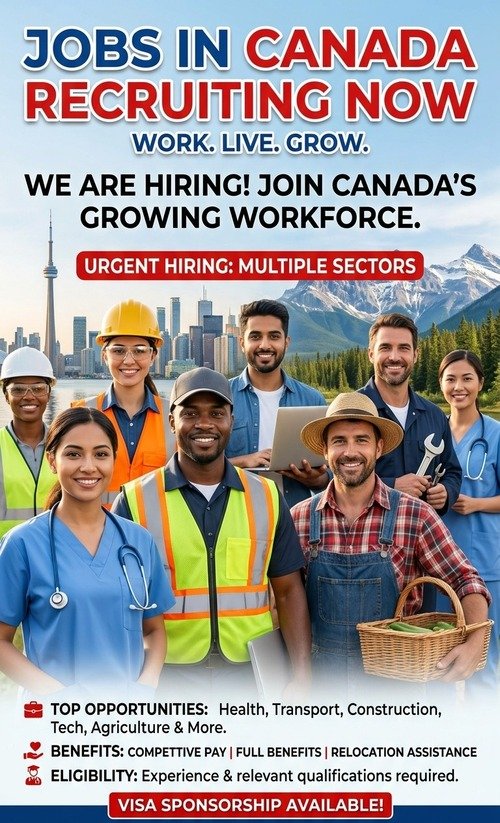
Canada Agricultural & Farm Worker Jobs for International Applicants. International job seekers can secure legitimate employment through Canada Agricultural & Farm Worker Jobs for International Applicants, which provide employer-sponsored work visas and pathways to Canadian permanent residency. Agricultural operations across Canadian provinces actively hire foreign nationals to solve ongoing labor shortages in crop production, greenhouse management, and livestock handling. Candidates applying for LMIA-approved farm worker jobs in Canada with visa sponsorship benefit from structured wage rates, employer-backed visa assistance, and mandatory housing provisions under federal migration rules. The hiring process utilizes the Temporary Foreign Worker Program (TFWP), allowing entry-level and experienced farm hands to work legally in Canada. Securing these positions offers stable earning potential, practical skills development, and long-term settlement opportunities for global applicants.
Canada Agricultural & Farm Worker Jobs for International Applicants
| Employment Attribute | Official Details & Specifications |
| Job Title / Primary Position | General Farm Worker, Crop Harvesting Laborer, Greenhouse Technician, Livestock Handler |
| Industry / Commercial Sector | Agriculture, Horticulture, Dairy Farming, Animal Husbandry & Food Production |
| Visa Sponsorship Type | Full Work Visa Sponsorship (LMIA Approved / Employer Sponsored Relocation) |
| Eligible Nationality | Open to All Foreign Nationalities Worldwide |
| Destination Country & Provinces | Canada (Ontario, British Columbia, Alberta, Saskatchewan, Manitoba, and Quebec) |
| Application Deadline & Cycle | Continuous Year-Round Recruitment (Peak Hiring: January to April for Spring Harvest) |
Comprehensive Overview of the Canadian Agricultural Labour Sector
The Canadian agricultural industry serves as a foundational pillar of the nation’s economic stability and international food trade. Canadian farm operators face persistent labor shortages due to aging domestic demographics, low rural population densities, and expanding agricultural output targets. To sustain high-volume food production, Employment and Social Development Canada (ESDC) collaborates with Canadian farmers to facilitate foreign worker recruitment. Securing Canada’s agricultural & farm worker jobs for international applicants requires navigating defined federal framework channels designed to protect temporary foreign workers while filling critical economic gaps.
How to Get a Registered Nurse (RN) Job in Canada from Overseas
🌍 More Available Jobs

Commercial agricultural employers rely heavily on the primary agriculture stream to hire foreign candidates when local recruiting efforts prove insufficient. Before issuing job offers to foreign nationals, Canadian employers must obtain a positive Labour Market Impact Assessment (LMIA). This document verifies that hiring an international applicant will not negatively impact the domestic job market. Corporate enterprises invest in global mobility strategies to maintain supply chain continuity across crop farming, greenhouse operations, and animal husbandry.
Canadian Agri-Recruitment Pipeline:
🌍 More Available Jobs
-
Canadian employers experience a domestic labor shortage.
-
Employer applies for Labour Market Impact Assessment (LMIA) via ESDC.
-
ESDC approves LMIA to verify market necessity & wage standards.
-
Job offer issued to international applicant with LMIA reference.
-
Candidate applies for a work permit via the IRCC portal.
-
Medical Clearance, Biometrics Enrolment, and Visa Issuance.
The Canadian government strictly regulates employment terms for foreign agricultural workers. Employers must offer salaries that meet or exceed regional prevailing wage rate compliance parameters established by federal job banks. International recruits receive formal contracts outlining daily duties, hourly pay, overtime rates, and housing provisions. These measures make Canada a prime destination for global agricultural workers seeking clear legal frameworks and stable employment.
Essential In-Demand Agricultural Job Roles and Specializations
The agricultural domain in Canada encompasses diverse specialized fields ranging from outdoor crop harvesting to high-tech indoor greenhouse production. Foreign applicants can evaluate various job profiles based on their technical skills, physical capabilities, and career goals.
Long Haul Truck Driver Jobs in Canada with LMIA Sponsorship
General Farm Labourers and Crop Production Staff
General crop production relies on field workers to manage land preparation, planting, weed management, and harvesting. Applicants seeking general farm laborer jobs in Canada for foreigners with free housing usually find opportunities in large-scale grain, fruit, and vegetable production. Duties include operating basic hand tools, monitoring crop growth, removing damaged vegetation, and packing harvested produce for transportation. These entry-level positions generally do not require prior formal degrees, as employers provide on-the-job training.
Outdoor field harvesting demands physical endurance and flexibility during peak seasons. Workers who show leadership skills can progress to field supervisor positions, overseeing daily harvest volumes and directing team tasks. Canadian employers value reliability, punctuality, and strict adherence to workplace safety regulations.
Greenhouse Operations and Hydroponic Technicians
Indoor agricultural production has grown significantly across Canada, particularly in regions like Leamington and Chatham-Kent, Ontario. Candidates looking for greenhouse worker job openings in Leamington, Ontario, with LMIA work in climate-controlled environments year-round. Greenhouse technicians monitor computer-controlled irrigation systems, apply organic pest controls, prune hydroponic tomato and cucumber plants, and hand-pick ripe produce.
Greenhouse Hydroponic Production Workflow:
-
Climate Control System: Optimizes temperature, humidity, and light.
-
Nutrient Delivery: Automated drip irrigation and nutrient balancing.
-
Technician Duties: Pruning, pollination, pest inspection, and hand picking.
-
Packhouse Grading: Quality inspection, sorting, and eco-packaging.
Indoor agricultural facilities operate continuously regardless of external weather conditions. Workers in hydroponic facilities gain experience with advanced agricultural automation, vertical farming equipment, and biosecurity protocols, making greenhouse operations a stable employment path.
Livestock Handlers and Dairy Farm Operators
Livestock and animal husbandry facilities require attentive, experienced personnel to maintain animal health and production schedules. Applicants targeting dairy farm worker visa sponsorship in Alberta for international candidates manage daily milking routines, maintain sanitation in milking parlors, monitor feed consumption, and assist veterinarians during calving operations.
Dairy & Livestock Management Responsibilities:
-
Daily Milking Operations: Managing automated milking systems (3x daily).
-
Feed & Nutrition Planning: Mixing silage, grain rations, and supplement monitoring.
-
Health & Herd Welfare: Identifying illness and administering treatments.
-
Sanitation & Biosecurity: Sterilizing barns, parlors, and processing areas.
Positions involving livestock management require strict compliance with animal welfare standards and farm biosecurity protocols. Roles like livestock technician and herd supervisor command higher hourly pay due to the technical knowledge required for herd management and disease prevention.
Agricultural Machinery Operators and Mechanics
Modern Canadian agriculture relies on advanced heavy equipment to manage massive farmland areas across the Prairie provinces. Employers seeking candidates for agricultural equipment operator jobs in Canada for foreign nationals prioritize applicants with experience operating combine harvesters, seeders, large tractors, and GPS-guided tilling systems.
Canada PR Linked Jobs With Visa Sponsorship 2027
Equipment operators need a valid driver’s license and technical understanding of farm machinery. Candidates with farm machinery technician certification often receive higher compensation packages and year-round employment opportunities.
Legal Pathways and Visa Streams for Overseas Farm Workers
Foreign workers can access several defined immigration pathways to work legally in the Canadian agricultural sector. Understanding the specific requirements of each visa stream helps candidates navigate their application process effectively.
Canadian Agricultural Visa Streams:
-
Primary Agriculture TFWP Stream: Open to all global countries, offers up to 2-year work permits with employer-provided housing.
-
Seasonal Agricultural Worker Program (SAWP): Open to participating SAWP nations, operating through bilateral government pacts focused on seasonal harvest needs.
-
Canadian Work Permit (IRCC): Provides a direct legal route that can lead to Provincial Nominee Program (PNP) pathways and permanent residence.
The Agricultural Stream Under TFWP
The primary route for non-resident job seekers is the Agricultural Stream of the Temporary Foreign Worker Program (TFWP). Canadian employers use this stream to recruit foreign labor for up to 24 months when local workers are unavailable. The position must fall under eligible agricultural NOC codes, and tasks must involve direct on-farm labor.
Under this stream, the employer pays for the worker’s round-trip transportation to Canada. Employers must also provide affordable or free housing that meets government inspection standards. Applicants receive an employer-sponsored agricultural work permit, tying their legal authorization to the sponsoring farm operation.
Seasonal Agricultural Worker Program (SAWP)
The Canada seasonal agricultural worker program SAWP online application framework handles seasonal farm labor recruitment through bilateral agreements. SAWP applies specifically to citizens of participating nations, including Mexico and select Caribbean countries. The program supplies workers during peak harvesting periods for up to 8 months per calendar year.
SAWP Inter-Governmental Framework:
-
Joint management by foreign country labor ministries and Employment & Social Development Canada.
-
Comprehensive worker selection, screening, and employer housing inspections prior to arrival.
-
Standardized bilateral employment contracts with guaranteed flight and housing coverage.
SAWP administration operates through formal agreements between the Canadian government and participating foreign ministries. Local government labor departments manage selection, travel logistics, and contract administration for participating workers.
Express Entry and Provincial Work Permits
Foreign workers interested in long-term relocation can utilize multi-stage immigration strategies. Candidates seeking dual-intent status obtain an LMIA work permit to gain Canadian experience, then apply for permanent residency. Corporate immigration legal representation fees are often paid by larger agricultural enterprises to manage work permit renewals and permanent residency conversions for key staff.
Step-by-Step Application and Recruitment Process for Foreign Talent
Securing a job in Canadian agriculture requires following a structured application procedure. Applicants must deal directly with legitimate employers or licensed recruitment channels to ensure a safe application process.
Recruitment & Application Milestones:
- Search verified LMIA positions on Job Bank Canada or official employer portals.
- Format resume according to Canadian standard guidelines, highlighting relevant NOC duties.
- Secure an official job offer letter alongside a positive LMIA reference number.
- Submit the online work permit application through the IRCC portal.
- Complete biometrics enrolment and a panel medical examination.
- Obtain visa counterfoil and Port of Entry Letter of Introduction.
LMIA Approved Jobs Canada for International Students 2027
Phase 1: Identifying Verified LMIA Employers
Candidates should begin their search on official government platforms like the Job Bank Canada official employer roster. Job listings that specify “LMIA Approved” or “Temporary Foreign Worker Stream” explicitly invite foreign applications.
Applicants can also submit direct applications to major agricultural enterprises with known foreign worker recruitment programs. These include companies like Highline Mushrooms, Sunrise Farms, Nature Fresh Farms, and Pure Hothouse Foods.
Phase 2: Document Preparation and Application Submission
Applicants need to prepare a clean, professional Canadian-style CV. Resume content should emphasize relevant practical experience, including manual labor, equipment operation, farm safety, and physical endurance.
Canadian Agri-CV Format Requirements:
-
Contact Information: Clean header, no photos, valid email address, and active phone number.
-
Professional Summary: Focus on physical stamina, safety protocols, and core farm skills.
-
Work History: Detail specific crop types, machinery operated, and daily production targets.
-
Education & Certifications: High school diploma, machinery licenses, and first aid training.
-
Language Skills: Level of English or French proficiency (targeting CLB 4 equivalent).
Important documents to assemble include:
-
A valid international passport with at least 12 months of validity.
-
Reference letters from previous agricultural or industrial employers.
-
Educational certificates or relevant machinery operation licenses.
-
Police clearance certificates from home countries.
Phase 3: Work Permit Processing and Visa Stamping
Once an employer issues a formal job offer and LMIA document, the candidate applies for a work permit through the IRCC portal. Applicants must complete biometrics enrolment and IRCC medical exam procedures at authorized collection centers.
After IRCC approves the application, the candidate receives a Port of Entry (POE) Letter of Introduction and a visa counterfoil stamped in their passport. This documentation allows travel to Canada, where border officials issue the actual work permit upon arrival.
Wages, Compensation Packages, and Relocation Benefits
Canadian labor law guarantees fair compensation and safe working conditions for temporary foreign agricultural workers. Pay structures conform to mandated provincial wage standards.
Mandated Agricultural Worker Benefits:
-
Guaranteed minimum prevailing hourly wage (CAD $17.85 – $25.00+).
-
Employer-paid inbound and outbound international transportation.
-
On-farm accommodation provided (free or capped at a maximum low weekly rate).
-
Immediate emergency workplace health and injury insurance coverage.
-
Overtime pay eligibility based on provincial labor legislation.
Employers providing on-farm employer-provided accommodation must ensure housing meets strict municipal health and safety standards. Accommodation arrangements typically include furnished quarters, heating, laundry facilities, and functional kitchen areas. Housing costs under low-wage agricultural programs are either fully covered or capped at minimal weekly deductions.
Employers manage international tax withholdings, Canadian Pension Plan (CPP) contributions, and Employment Insurance (EI) deductions using standardized payroll systems. Workers receive emergency medical coverage from their arrival date until provincial health coverage takes effect.
Pathways to Canadian Permanent Residency (PR) for Farm Laborers
Working in Canadian agriculture can provide a foundation for long-term immigration. Temporary foreign workers can leverage their Canadian job experience to apply for permanent residency through several streams.
Permanent Residency Migration Overview:
-
Accumulate 12 months of continuous Canadian farm work experience.
-
Demonstrate basic language proficiency equivalent to CLB 4 in speaking and reading.
-
Apply to specialized Provincial Nominee Program (PNP) streams (e.g., OINP In-Demand Skills, BC PNP Semi-Skilled, Alberta Rural Renewal, Saskatchewan Farm Pathway).
-
Transition from temporary work permit status to Canadian Permanent Resident (PR) status.
Foreign laborers can pursue permanent residency through specialized provincial streams:
-
Ontario Immigrant Nominee Program (OINP) In-Demand Skills Stream: Targets NOC 85100 (General Farm Workers) with local job offers.
-
British Columbia PNP Entry-Level and Semi-Skilled (ELSS): Supports agricultural and greenhouse workers who complete 9 months of continuous employment in B.C.
-
Alberta Rural Renewal Stream: Assists rural agricultural operations in retaining foreign staff long-term.
-
Saskatchewan Experience Category – Long-Term Work Permit Stream: Allows agricultural workers with 6 months of local experience to apply for provincial nomination.
Applicants need to demonstrate basic language skills, typically achieving a Canadian Language Benchmark (CLB) level 4 in English or French. Securing permanent residency grants foreign workers access to healthcare, social benefits, and a pathway to Canadian citizenship.
Fraud Mitigation, LMIA Verification, and Worker Rights Protection
Protecting foreign workers from recruitment fraud and workplace exploitation remains a priority for Canadian immigration authorities. Applicants should learn to identify common warning signs and understand their rights under Canadian law.
Recruitment Fraud Warning Signs:
-
Flag 1: Demanding upfront placement fees or guaranteed visa processing money.
-
Flag 2: Issuing unofficial job offers without a verified 7-digit LMIA reference code.
-
Flag 3: Conducting recruitment exclusively through informal messaging platforms.
-
Flag 4: Offering pay rates significantly below provincial minimum wage standards.
-
Flag 5: Refusing to provide a formal written employment contract prior to departure.
Canadian law strictly forbids recruiters from charging job placement fees to prospective foreign workers. Legitimate employers pay all LMIA application fees, legal expenses, and recruitment overhead directly. Candidates should verify LMIA documents through ESDC portals before making travel arrangements or resigning from current jobs.
Foreign farm workers in Canada share the same basic workplace safety protections as domestic employees. If a worker experiences unsafe conditions or mistreatment, Canadian immigration policies allow them to apply for an open work permit for vulnerable workers. This permit lets affected employees leave bad work environments and find employment with another agricultural employer safely.
Frequently Asked Questions (FAQs)
Do Canadian farm worker jobs offer full visa sponsorship for foreign applicants?
Yes, Canadian agricultural employers facing local labor shortages can obtain positive LMIA approvals to sponsor foreign workers. Sponsoring employers assist applicants in securing closed, employer-specific work permits under the Temporary Foreign Worker Program.
What is the average wage for agricultural workers in Canada?
Hourly pay rates generally range from $17.85 to $25.00 for general farm laborers and greenhouse workers. Experienced heavy machinery operators, livestock technicians, and farm supervisors can earn between $22.00 and $35.00 per hour, depending on the province and job responsibilities.
Is free housing provided to international farm workers?
Under the primary agriculture TFWP stream and SAWP frameworks, employers must provide adequate, inspected housing for foreign agricultural workers. Housing is provided either free of charge or at a low, government-regulated weekly rate.
Do I need high English language scores to qualify?
Entry-level agricultural positions require basic functional communication skills, equivalent to Canadian Language Benchmark (CLB) level 4. Workers need enough language proficiency to understand workplace safety instructions, read equipment labels, and communicate with supervisors.
Can farm workers bring their families to Canada?
Low-wage temporary farm work permits generally do not include immediate family accompaniment. However, workers who transition to permanent residency through Provincial Nominee Programs can sponsor their spouse and dependent children for Canadian permanent residency.
Strategic Summary and Final Next Steps
Navigating Canada Agricultural & Farm Worker Jobs for International Applicants provides foreign workers with a structured path to legal employment and potential long-term settlement. By securing positions with LMIA approved farm worker jobs in Canada with visa sponsorship, foreign nationals gain valuable experience, protected wages, and employer-supported accommodation. Candidates can begin by building a Canadian-style resume, applying through official channels like Job Bank Canada, and tracking provincial nomination pathways to transition from temporary farm work to permanent residency.
Official Visa Sponsorship & Employment Resources
-
Government of Canada Official Job Bank: https://www.jobbank.gc.ca — Search verified temporary foreign worker job listings and LMIA-approved opportunities across all Canadian provinces.
-
Immigration, Refugees and Citizenship Canada (IRCC): https://www.canada.ca/en/immigration-refugees-citizenship.html — Official information on work permits, biometrics, medical exams, and permanent residency programs.
-
Employment and Social Development Canada (ESDC) Agriculture Stream: https://www.canada.ca/en/employment-social-development.html — Guidelines on primary agriculture regulations, LMIA processing, and employer housing standards.
Get Visa Sponsorship Jobs!
Never miss international job openings with visa sponsorship! Join our professional networks for daily updates.